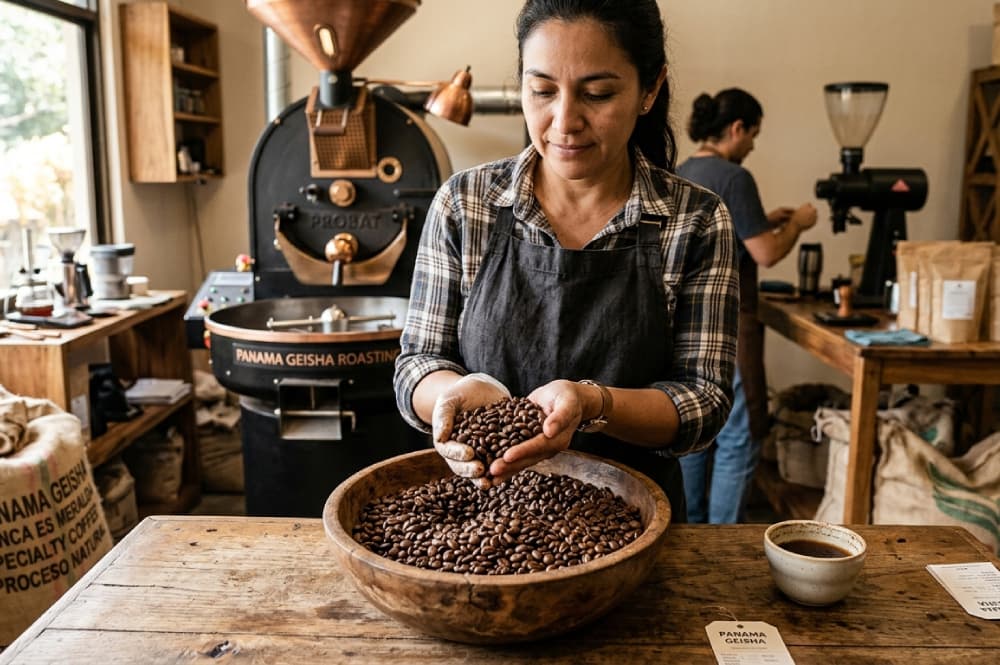
In the global landscape of specialty beverages, Geisha Coffee (often referred to as Gesha) stands as the undisputed royalty of the bean world. Renowned for its tea-like body and intoxicating floral aromatics, this variety has shattered auction records and redefined what coffee can taste like. Far from your standard morning cup, Geisha represents the pinnacle of agricultural excellence and sensory complexity.
Key Takeaways
- Geisha Coffee is famous for its distinct floral and fruit-forward flavor profile, often featuring notes of jasmine and bergamot.
- While it originated in Ethiopia, it gained worldwide fame through high-altitude farms in Boquete, Panama.
- It is consistently ranked as one of the most expensive coffees due to its difficult cultivation and low yield.
- This variety is a prime example of the differences between specialty coffee and commercial grade beans.
The Remarkable History of Geisha Coffee
Despite its name, Geisha coffee has no historical connection to Japan. The name is derived from the Gesha village in Ethiopia, where the seeds were originally collected in the 1930s. From Africa, the variety made a long journey through Tanzania and Costa Rica before finally landing in Panama in the 1960s.
For decades, it remained an anonymous part of mixed harvests because the trees were thin and difficult to manage. It wasn’t until 2004, when the Peterson family of Hacienda La Esmeralda entered it into the “Best of Panama” competition, that the world realized its potential. Judges were stunned by its unique profile, which more closely resembled a fine tea than a traditional coffee. Since then, it has become a staple for competitors in the World Barista Championships.
Decoding the Flavor Profile: Why It Is Unique
What sets Geisha Coffee apart from other Arabica varieties is its incredible aromatic complexity. Unlike the heavy chocolate and nutty notes found in many South American coffees, Geisha is prized for its high-toned acidity and ethereal lightness. For those sensitive to traditional brews, this variety often fits well within the low acid revolution due to its refined, fruit-based acidity rather than harsh bitterness.
- Aromatics: Intense jasmine, honeysuckle, and rose.
- Flavor Notes: Bergamot, peach, apricot, and mango.
- Body: Light, silky, and tea-like (similar to Earl Grey).
- Finish: Long, clean, and sweet with lingering floral notes.
The Role of Terroir
The best Geisha beans are grown at extreme elevations, often above 1,700 meters. These high altitudes slow the cherry’s maturation, allowing complex sugars and organic acids to develop. The volcanic soil of Panama and the specific microclimates of regions like Boquete provide the perfect environment for this sensitive plant to thrive. According to World Coffee Research, the genetics of the Gesha variety require very specific conditions to express these legendary traits.
Brewing Mastery: How to Handle Geisha Beans
When you have a coffee this rare and expensive, your brewing technique must be precise. Because Geisha is so delicate, heavy-handed brewing can easily mask its floral nuances. Most experts recommend manual pour-over methods like the Hario V60 or Chemex. These methods allow for the clarity of flavor that Geisha is famous for.
While some adventurous baristas use it for espresso, it requires a very specific approach. If you are interested in refining your extraction skills, check out our guide on selecting beans and mastering grind consistency to ensure you don’t waste these precious grounds. The goal is a light extraction that highlights the “top notes” of the coffee.
| Brew Method | Recommended Ratio | Grind Size | Best Feature |
|---|---|---|---|
| V60 Pour Over | 1:16 | Medium-Fine | Maximum Clarity |
| Chemex | 1:15 | Medium-Coarse | Clean, Crisp Body |
| French Press | 1:17 | Coarse | Aromatic Intensity |
Is Geisha Coffee Worth the Price?
The price of Geisha Coffee can range from $50 to over $1,000 per pound at auction. This premium is driven by extreme scarcity and the high risk involved in farming it. Geisha trees have a lower yield than other varieties and are highly susceptible to pests and diseases. Furthermore, the labor required to hand-pick only the perfectly ripe cherries at high altitudes adds significantly to the cost.
For the coffee enthusiast, drinking a Geisha is a bucket-list experience. It is less of a daily caffeine fix and more of a sensory journey, comparable to tasting a rare vintage wine. If you enjoy experimental flavors, you might also find interest in Cascara tea, which is made from the dried husks of coffee cherries—Geisha cascara is particularly sought after for its sweet, hibiscus-like flavor.
Geisha coffee is not just a drink; it is a testament to what is possible when nature, geography, and meticulous farming converge. It invites us to slow down and appreciate the profound complexity of a single bean.
Frequently Asked Questions
Why is it called Geisha coffee?
The name comes from the Gesha region in Ethiopia. Over time, it was transliterated as “Geisha,” though many in the industry are moving back to the original “Gesha” spelling to avoid confusion with Japanese culture.
Does Geisha coffee have more caffeine?
No. In fact, Geisha (Arabica) typically has less caffeine than Robusta varieties. Its value lies in flavor and aroma, not in stimulant strength.
Where can I buy authentic Geisha coffee?
Look for reputable specialty roasters who provide transparency about the farm and elevation. Many top-tier beans come from Panama, but high-quality Geisha is also being produced in Colombia, Ethiopia, and even Hawaii.
What does Geisha coffee taste like?
Geisha coffee is known for its highly aromatic and complex flavor profile that stands apart from typical coffee. It often features floral notes like jasmine and rose, combined with bright fruit flavors such as bergamot, peach, and tropical fruits. The body is light and tea-like, with a smooth, clean finish that lingers on the palate. Many people compare the experience to drinking a delicate tea like Earl Grey rather than a traditional bold coffee.
Why is Panama Geisha so expensive?
Panama Geisha is expensive due to a combination of rarity, farming difficulty, and exceptional quality. The plants produce lower yields compared to other coffee varieties and require specific high-altitude conditions to develop their signature flavors. Farmers must carefully hand-pick only perfectly ripe cherries, which increases labor costs. Additionally, Geisha coffees from regions like Boquete have gained global recognition through competitions such as the Best of Panama, driving demand far beyond supply and pushing prices to premium levels.
Related Stories

Espresso Excellence: Selecting Beans & Mastering Grind Consistency

What Is Cascara Tea? The Superfruit Brew With 4x Less Caffeine Than Coffee